

X5 Bach. Music Across the Generations
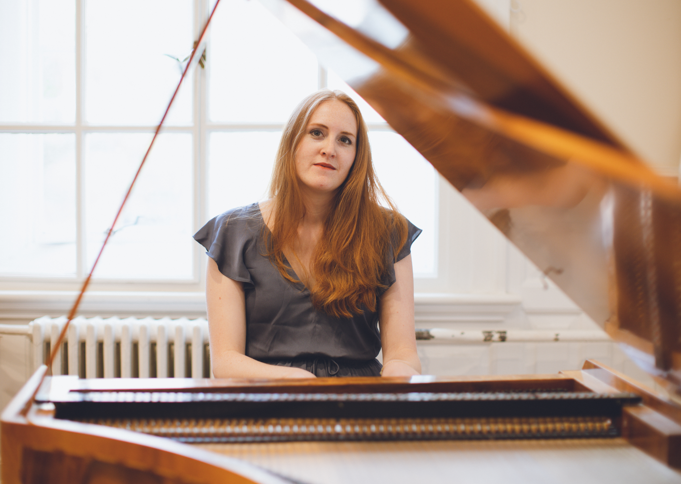
Join Dominika Maszczynska who will be performing a full Bach programme on our Shnatz Piano Forte.
The programme is a metaphorical journey through the Bach family home. The concert
opens with the well-known and cheerful Prelude and Fuguein G major by Johann
Sebastian Bach. Bach’s Preludes and Fuguesform a cornerstone of keyboard literature
and symbolise the tradition on which hissons built their own technique and musicality,
perfecting, among other things, the art of counterpoint.
Next, the listener encounters Empfindsamkeit – the sensitive, expressive style
represented in the programme by Wilhelm Friedemann and Carl Philipp Emanuel.
Short and simple in form yet highly expressive, W.F. Bach’s Polonaises employ refined
ornaments meticulously described by C.P.E. in his Essay on the True Art of Playing
Keyboard Instruments, and surprise with harmoniesfull ofsuspense. The Fantasia in A
minor takes usthrough a wide range of emotionalstatesin a shortspan – from pride and
excitement to resignation and disappointment. Its declamatory character evokesthe
recitative-like passages of hisfather’sfantasies.
Carl Philipp Emanuel’s Sonata in F major, equally expressive in style, often includes an
almost absurd humour that wasfar ahead of itstime. The playful, deceptive effectsin
C.P.E.’s music can be compared only to certain devices used later by Haydn or
Beethoven.
Moving into a more “salon” style, we encounter Johann Christoph Friedrich’s music
through his Variations on Ah, vous dirai-je, Maman (Twinkle, Twinkle, Little Star). This
music islight and enjoyable, exploring a variety of forms and types of keyboard texture.
The concert concludes with Johann Christian’s Sonata in C minor. The so-called
“London Bach,” wasthe first to give a public piano concert, in 1768. The sonata
combinessalon elegance with turbulent virtuosity.
Ticket includes entry to the Museum after the concert
.
Options
Join Dominika Maszczynska who will be performing a full Bach programme on our Shnatz Piano Forte.
The programme is a metaphorical journey through the Bach family home. The concert
opens with the well-known and cheerful Prelude and Fuguein G major by Johann
Sebastian Bach. Bach’s Preludes and Fuguesform a cornerstone of keyboard literature
and symbolise the tradition on which hissons built their own technique and musicality,
perfecting, among other things, the art of counterpoint.
Next, the listener encounters Empfindsamkeit – the sensitive, expressive style
represented in the programme by Wilhelm Friedemann and Carl Philipp Emanuel.
Short and simple in form yet highly expressive, W.F. Bach’s Polonaises employ refined
ornaments meticulously described by C.P.E. in his Essay on the True Art of Playing
Keyboard Instruments, and surprise with harmoniesfull ofsuspense. The Fantasia in A
minor takes usthrough a wide range of emotionalstatesin a shortspan – from pride and
excitement to resignation and disappointment. Its declamatory character evokesthe
recitative-like passages of hisfather’sfantasies.
Carl Philipp Emanuel’s Sonata in F major, equally expressive in style, often includes an
almost absurd humour that wasfar ahead of itstime. The playful, deceptive effectsin
C.P.E.’s music can be compared only to certain devices used later by Haydn or
Beethoven.
Moving into a more “salon” style, we encounter Johann Christoph Friedrich’s music
through his Variations on Ah, vous dirai-je, Maman (Twinkle, Twinkle, Little Star). This
music islight and enjoyable, exploring a variety of forms and types of keyboard texture.
The concert concludes with Johann Christian’s Sonata in C minor. The so-called
“London Bach,” wasthe first to give a public piano concert, in 1768. The sonata
combinessalon elegance with turbulent virtuosity.
Ticket includes entry to the Museum after the concert
.
Our payments are processed using : WorldPay